





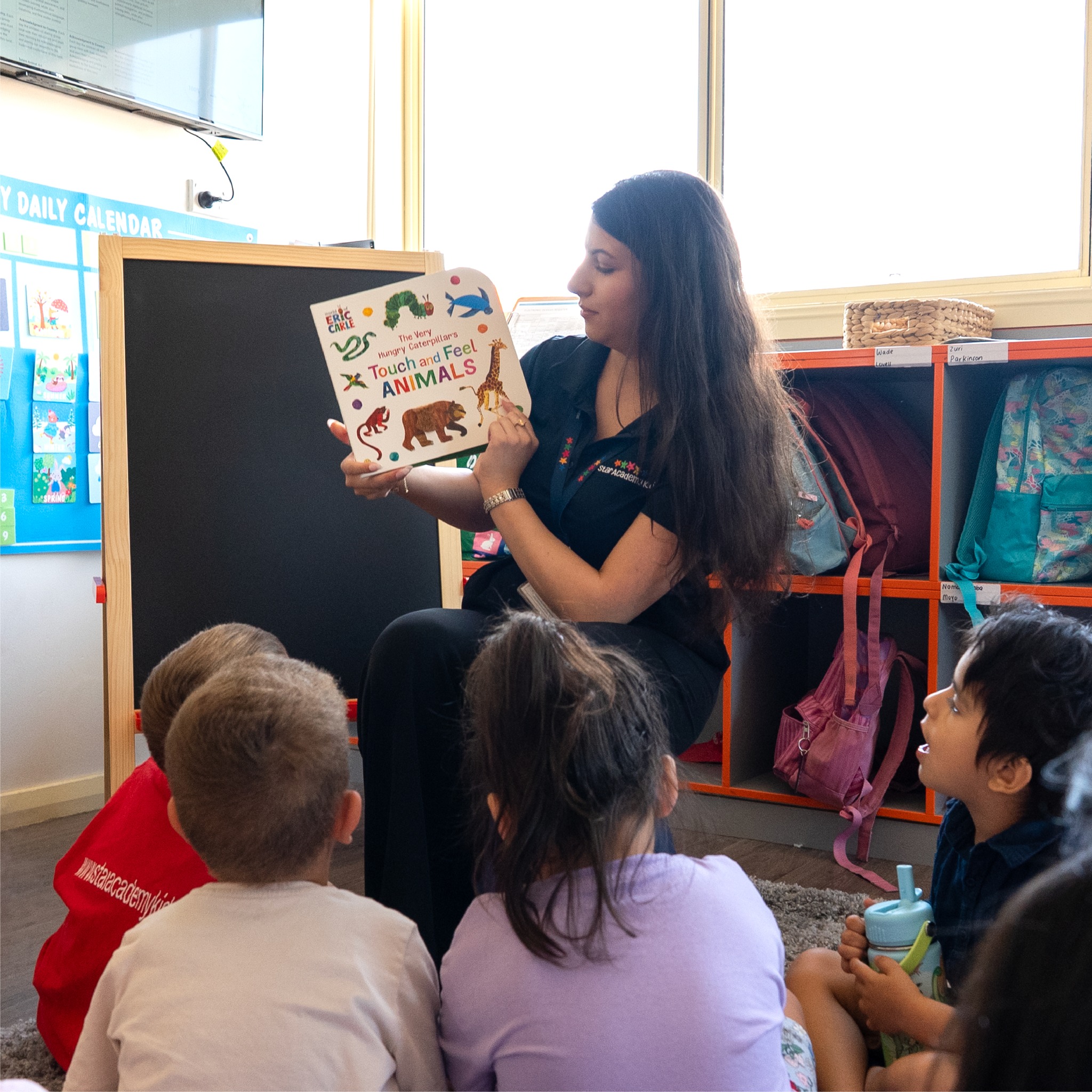
Transitioning from a day care centre to school is a significant milestone in a child’s life. It marks the beginning of their formal education journey. Childcare centres play a crucial role in preparing children for this transition by providing a supportive and enriching environment.
At Star Academy Kids, we understand that preparing for this transition involves much more than academic knowledge. It’s about nurturing the child.
School readiness means helping children feel secure in themselves, capable in their environment, and confident to take on new challenges. It’s about building the social, emotional, physical, and cognitive skills that will not only support a smooth transition to school but also lay the foundation for lifelong learning.
The approach should be child-centred and holistic through an environment where children feel safe to express themselves, take risks, and explore through play; all while being supported by consistent routines, caring educators, and meaningful relationships. With the right guidance and encouragement, every child can step into their school journey feeling excited, equipped, and ready to thrive.
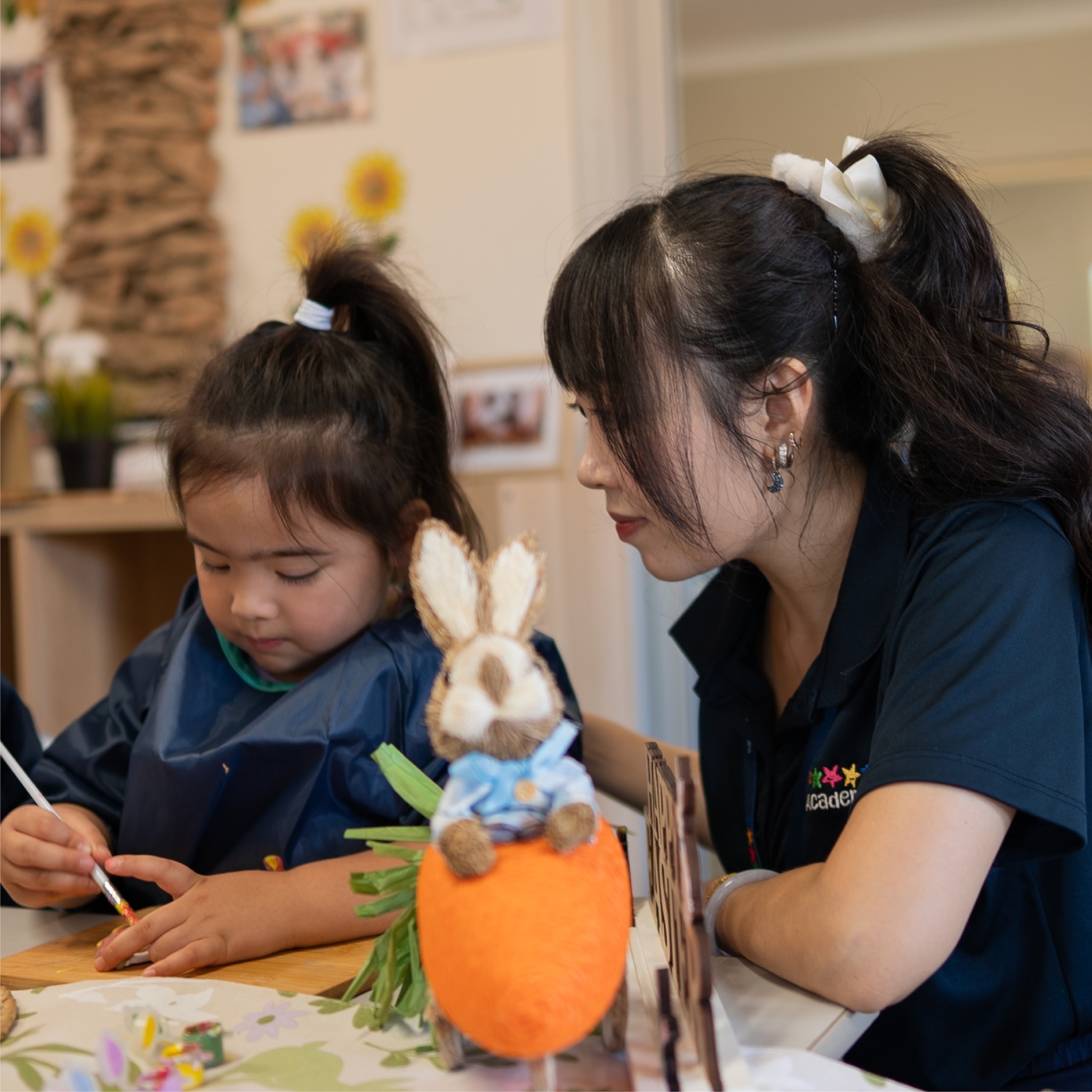
8 ways childcare centres help children prepare for school
- Building independence and self-help skills: childcare centres focus on developing independence and self-help skills in children. They encourage children to take responsibility for tasks such as dressing themselves, using the restroom independently, and tidying up their belongings. By developing these skills, children gain a sense of confidence and self-reliance, which are essential for a successful transition to school.
- Academic readiness: childcare centres create an environment that promotes early literacy and numeracy skills. Through age-appropriate activities and play-based learning, children are exposed to pre-reading and maths concepts. They engage in activities that enhance language development, storytelling, early writing skills, and basic number recognition. These foundations lay the groundwork for a smoother transition to the academic expectations of school.
- Social and emotional preparation: school is a new social setting where children interact with a larger group of peers and adults. Childcare centres facilitate socialisation by providing opportunities for children to engage in group activities, practice sharing, taking turns, and resolve conflicts peacefully. They also help children recognise and express their emotions, teaching them valuable skills in empathy and self-regulation. These social and emotional competencies play a vital role in ensuring a successful transition to school.
- Developing fine and gross motor skills: childcare centres prioritise the development of fine and gross motor skills, which are essential for school readiness. Through art projects, puzzles, manipulatives, and outdoor play, children enhance their hand-eye coordination, dexterity, balance, and strength. These skills enable them to participate fully in classroom activities and physical education programs in school.
- Familiarising with school routines: childcare centres establish structured daily routines that mirror the rhythm of a school day, including playtime, group activities, meals, and rest periods. This consistency helps children understand expectations, build a sense of security, and become familiar with predictable schedules, making the transition to a more structured school environment smoother and more comfortable.
- Language development: language skills are fundamental to a child’s success in school. Daycare centres provide an immersive environment where children engage in conversation and develop vocabulary. Through storytelling, reading, and group activities, children refine their language skills, making it easier for them to communicate with teachers and peers once they enter school.
What school transition strategies do educators use?
Transitions are successful when youngsters feel included, secure and confident, and for this reason, educators consider the individual needs of children, and partner with families and schools to help ensure a smooth transition to big school.
Instead of just focusing on the first day of class, educators understand that the school transition process happens over time, not overnight. In fact, it starts in preschool and extends to the point when each child and their family feel like they belong at the school.
This means that as the preschool year draws to a close, educators are using many ‘transition to school experiences’ to support transitions and help children gain confidence and understanding in preparation for their next step.
In practice:
- Talk to children before they begin school and encourage them to ask questions or raise concerns
- Communicate with local schools and arrange visits to meet teachers, see classrooms, meet other children and generally explore the educational environment
- Sometimes invite school students to visit the service and share their experiences with preschoolers
- Include school-themed props in the dramatic play areas, e.g. uniforms, schoolbags and chalkboards
- Help children develop their self-help and social skills through routine activities, e.g. children might practice clicking open lunch boxes and twisting off drink bottle lids at meal times
What role does the educator play during a transition in childcare?
As well as supporting children, educators or early childhood school teachers also partner with families and offer knowledge and support to parents.
They’re on hand to:
- Offer advice about a child’s school readiness (if there’s flexibility around when they can start)
- Suggest ways for parents to support their child’s smooth transition to school
- Explain the service’s transition to school strategies as they can provide guidance and tailored support
- Talk through any concerns, recognising that parents are also embarking on a new journey and transitioning to ‘school mum’ or ‘school dad’
At Star Academy Kids, our dedicated staff implements age-appropriate learning experiences that engage children intellectually and creatively. From music and art to science experiments and storytelling, these activities stimulate curiosity and a love for learning. Early exposure to such experiences can create a lifelong passion for knowledge.
Daycare centres often have classroom-like settings that introduce children to the environment they will encounter in school. Children learn to follow instructions, participate in group activities, and work on individual tasks. Familiarising them with the classroom setting eases any anxiety they may have when transitioning to school.
Daycare centres offer numerous benefits for children as they prepare for school. From academic readiness and social-emotional development to motor skills and language development, daycare centres provide a nurturing environment that helps growth and learning.
By enrolling your child in a high-quality daycare program, you are setting them up for success as they embark on their educational journey. Our team is here to help you with all of your enquiries, contact us now.