
Categories
Blog

Why is Play Important in Children’s Development? 

Play can immensely help children with their overall development: 

  • Physical 
  • Social and emotional 
  • Cognitive 
  • Literacy and numeracy 

Physical development 

Through play, children can activate, use and further build their small and large muscles. By walking and running around, their muscles and bones can get stronger. By climbing and jumping, they get to exercise more and coordinate different parts of their bodies. This will also help them gain confidence when they’re about to try something intimidating (such as climbing a height they’ve never done before). 

Social and emotional development 

Play can also help children better get along with others. As a result, their playtime will be more fun and interactive. They will also gain confidence when meeting other children such as in dance studios and early learning centres. 

Through play, children can also experience challenges and successes. This can help them better cope and make sense of the world around them and learn how to have an appropriate social or emotional response. They will start to learn that there are “silent or unspoken rules” in different social situations. 

Cognitive development 

Play is also a form of learning. In fact, play-based learning has become the emphasis in early childhood development. That’s because through play, children can learn concepts such as numbers, shapes and colours. They also get to learn how to solve problems and achieve small goals during playtime. Through play, they can learn many cause-effect relationships and better anticipate the consequences of their actions and decisions. 

Literacy and numeracy 

Playtime is not just all about jumping and running around. During play, children often have to deal with different objects and concepts. They also have to communicate and express themselves through words. Children can also get familiar with different letters and numbers. 

Play is a rich form of learning where children can develop in several dimensions (physical, social, emotional and cognitive). As a result, early learning centres today emphasise play-based learning in line with that scientific research tells us about how children properly develop. 


Categories
Blog

What are Some Good Creative Activities for Children? 


To help children further develop their creativity, in general you should help them: 

  • Get used to different textures (e.g. sticky, wet, rough, slimy) 
  • Learn how to work with paint, paper and other materials (let them touch and play with these) 
  • Learn more about lines, shapes and colours 
  • Get used to holding pencils and other drawing materials so they can further develop their fine motor skills (will be valuable in helping them with their handwriting skills) 

In line with those ideas, some fun and creative activities for toddlers are: 

  • Finger Painting: Give your toddler some washable finger paints and let them explore their creativity by making hand and finger prints on paper. 
  • Play Dough: Play dough is a classic toddler activity that helps build their fine motor skills and imagination. You can also add cookie cutters, rolling pins, and other tools to make the experience more fun. 
  • Sticker Art: Give your toddler stickers and let them create their own designs on paper or a sticker book. 
  • Coloring: Provide your toddler with crayons, markers, or colored pencils and encourage them to color in coloring books or on blank paper. 
  • Sensory Bins: Fill a bin with different textures and materials for your toddler to explore, such as rice, beans, sand, or water. 
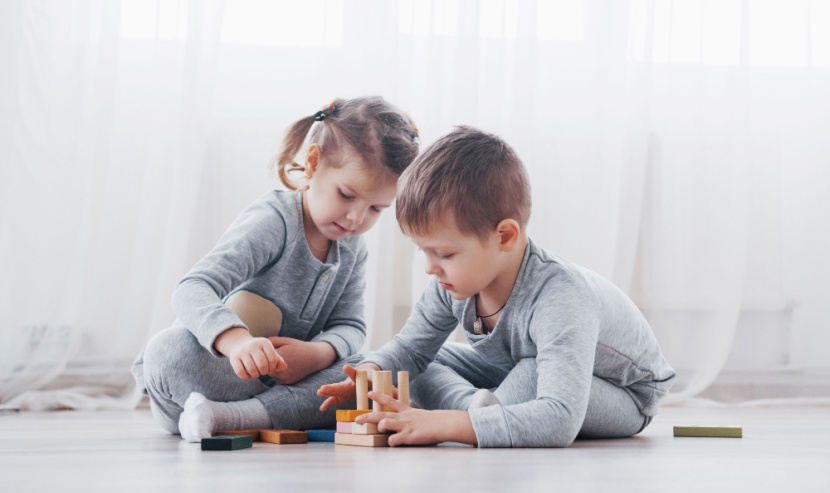
  • Building with Blocks: Encourage your toddler to build structures with blocks. This activity will help develop their problem-solving and hand-eye coordination skills 
  • Balloon Play: Blow up some balloons and let your toddler play with them. This can be a fun and safe way for them to work on their gross motor skills. 
  • Scavenger Hunt: Create a scavenger hunt with items that your toddler can find around the house, such as toys or household items. 
  • Water Play: Fill a basin with water and let your toddler play with cups, spoons, and other utensils. This can be a fun and educational activity that helps develop their sense of touch and coordination. 

With these activities, children can further develop the following abilities: 

  • Creativity and imagination 
  • Fine motor skills and hand-eye coordination 
  • Willingness to explore and express themselves 
  • Confidence (because they know they’re free to express themselves and try out new things) 

As a result, children can become better equipped for the big school. These abilities can also help them have more fun while learning. 

Categories
Blog

How to Have More Fun with Your Child 


Children require fun and stimulation in their early years. In fact, fun and playtime help children with their rapid brain development. They actually require a variety of experiences so that their neurons will keep developing and reinforcing their neural connections. 

Aside from cognitive development, having more fun with your child also results in the following: 

  • Your child receives full attention from you 
  • Your child feels their importance 
  • You can better see and understand your child’s point of view 
  • You learn more about your child’s likes and worries 
  • You strengthen the bond with your child 
  • Your child will feel safer (and feel that the world is still a stable and safe place despite the overwhelming new experiences) 

Ideas for having more fun time with your child 

To add more variety and enjoyment to the time and moments with your child, here are some practical ideas: 

  • Eat meals together as a family (make it a fun and easy moment so your child can talk more) 
  • Prepare a snack or meal together 
  • Go to the grocery together and let your child help with your decisions on what to buy 
  • Read stories to your child during bedtime 

Notice that these are ordinary everyday activities that you can do anytime. Thankfully, these ordinary activities can still feel special to your child because of the time and attention you dedicate. 

The key here is to let your child talk more and decide more. It’s a way to practice your child’s communication and decision-making skills. With this practice, your child’s brain will be continuously stimulated and exercised. This can help accelerate your child’s brain development which could be crucial for preparing for the big school and beyond. 

In summary, having more fun with your child can result in huge benefits, not just in having light and enjoyable experiences, but also in helping your child become more prepared for the future. 


Categories
Blog

Why Monitoring a Child’s Development is Important

Monitoring a child’s development is important in the early detection and correction of developmental problems. For example, if children have been missing their language and cognitive milestones (e.g. a 2-year old child still can’t say at least two words together), this problem should be corrected early on. Or, the cause of the problem might be something serious and this requires professional intervention. 

Monitoring a child’s development 

Proper monitoring, as well as early professional intervention if necessary, can prevent a child from being left behind. This problem is serious and can be long term because when some children are left behind in their development, the negative effects can accumulate and reinforce one another. 

For example, if children still can’t follow simple instructions, this problem can get worse in the coming months and years. When they can’t follow simple instructions from parents or early learning educators, children won’t be able to keep up with the daily activities at home or early learning centre. As a result, they won’t experience much fun and miss out on the important learning activities and experiences of the day. This can go on for the next weeks and months. 

Also, that problem might just be a sign or symptom of something more serious (e.g. problem in hearing or speech). If that problem is not spotted early on, children will be left behind further and even experience frustration and isolation (they’re clueless and helpless of what’s actually going on). 

Why developmental milestones are important 

To spot those problems early on and see if a child is being left behind, it helps to know some of the developmental milestones. These milestones are the skills often expected for a child of a certain age. 

For example, a 2-year old child is often expected to be able to do the following: 

  • Can use gestures such as nodding 
  • Can hold and play with more than one toy simultaneously 
  • Can eat with a spoon 
  • Can already recognise other people’s emotions such as being sad or upset 

This is a rough guideline because a 2-year old child might be able to do more or they’re just being left behind for a bit (might just be delayed for a few weeks or months). Children will be able to develop important capabilities sooner or later and perhaps catch up with other kids. 

But if you have concerns, it’s good to talk with the educators at the early learning centre (or they will notify you immediately once they’ve noticed an issue). They can better enlighten you about what’s going on and if further intervention is necessary. 

Categories
Blog

What are the Benefits of Community Involvement?

“It takes a village to raise a child.” 

Truly, early childhood development is not just about a child’s physical and cognitive development. It’s also about a child’s sense of belonging in a community. 

Belonging, Being & Becoming

Notice that “Belonging” is the first emphasis in the Early Years Learning Framework of Australia. Also, in the Framework’s learning outcomes, the sense of belonging or its derivatives are being mentioned again and again. 

For example, in the second learning outcome, “Children are connected with and contribute to their world,” notice that there’s special emphasis on Belonging. Under this learning outcome, children should be able to develop the following: 

  • Gain an understanding of reciprocal rights and responsibilities 
  • Respond to diversity with respect
  • Become aware of fairness 
  • Become socially responsible and show respect for the environment 

In other words, when children develop a sense of belonging, they start to develop the following essential virtues: 

  • Respect 
  • Understanding 
  • Empathy 
  • Sense of responsibility 

At an early age, children can also gain an understanding of their place in this world and how their actions affect others. As a result, they can better get along with other people and learn cooperation and collaboration. 

Respect and understanding

Societies and economies are becoming more diverse and interconnected. In these modern times, it’s critical for children to develop an understanding about different cultures and practices. 

With a sense of belonging developed through community involvement (facilitated by parents and early learning centres), children will be exposed early on a variety of cultures, practices and environments. It’s like opening their world at an early age to see what’s out there. 

With this early exposure and exploration, children can begin to see and appreciate the differences among people. Children might even start to sense subtle social cues and silent rules that influence how groups of people behave and come up with a decision. This awareness, appreciation and understanding can immensely help them in the future (especially when facing challenging social situations). 

A sense of belonging and community participation can help children with their overall development. Aside from preparing them for the future, it’s also a good way to provide them with rich experiences that can make their childhood more enjoyable. 

Categories
Blog

Why Are Multicultural Experiences Important for Child Development

Multicultural experiences help children better appreciate other people’s backgrounds, beliefs and practices. In other words, those experiences can help expand their thinking and awareness about diversity and variety. In addition, multicultural experiences can also help children better navigate the world around them and the challenges and opportunities they’re about to face. 

Why multicultural experiences are important 

Australia has been home to people coming from a diverse set of backgrounds and cultures. Aside from restaurants that serve international cuisines and places of worship for different religious beliefs, our schools and workplaces also show and support diversity. 

Further, our world has now become an interconnected and interdependent one, especially when it comes to information and commerce. Even when there’s a common language in business (money and growth), still, in places of business and different markets we can find cultures and practices unique to each one. For example, there’s this term called “company culture” that describes an organisation’s shared beliefs and values. 

For our children, it’s important that they get exposed to different beliefs, practices and values at an early age. Aside from better appreciation of diverse cultures and backgrounds, children can also gain a greater skill at understanding the differences among people. This better understanding can help them better communicate and cooperate with others. It’s also a good way for them to learn how to work with others and achieve a common goal despite the differences. 

Multicultural experiences also add variety to children’s activities. This variety can help them expand their comfort zones and make their early years more fun as well. The unique stories, costumes and performances coming from different cultures can make their early experiences much richer. 

Other experiences and activities are still important. Sports activities and other extracurriculars still play a role in supporting child development. But for further benefits and richer experiences, multicultural education can help children expand their comfort zones and better get along with other people. 

Categories
Blog

How to Teach Critical Thinking to a Child


Critical thinking is about forming judgment based on facts and evidence. It’s also a way of thinking clearly and rationally. It’s an essential core skill in this modern day where critical thinking can help us arrive at the right decisions and interpretation of what happens around us. 

Children and critical thinking 

For children, critical thinking is also an essential core skill. That’s because this can help them form a solid foundation for their further learning and development. This solid foundation can also help them do well in big school and beyond. Through critical thinking, they can better understand academic concepts they’re about to encounter in the big school. 

To help your child become a critical thinker, here are some of the things you can do: 

  • Always provide them with choices 
  • Provide several opportunities for play 
  • Teach and encourage them to solve problems 
  • Let them feel and face the challenges (instead of helping them immediately) 

The goal is to always let them think and provide them opportunities to face several appropriate challenges especially through play. It also helps to always provide them with choices so they can always compare the options they have. This comparison allows them to analyse what makes something better and whether the choice will lead them to the best possible outcome. 

Every day, you can help your child become a critical thinker. Daily communication with children can help stimulate their brains. If you constantly ask them questions and allow them to arrive at answers of their own, they can gradually build their critical thinking skills. This will also help them become quicker in analysing their choices and coming up with useful and even surprising answers. 

Every day is a good opportunity to help children become critical thinkers, whether at home or at the early learning centre. The key here is to provide them with enough time and opportunities to think clearly and to overcome a variety of appropriate challenges. It also helps to maintain a stimulating environment with adequate amounts of learning resources and materials. This is one practical and proven way to support children’s rapid brain development. 


Categories
Blog

What Skills Do Children Need to be Successful?

To help children have a bright future, it’s good to help them gain the core skills they need to navigate life’s challenges. Academics and extracurricular activities help as well as everyday experiences which shape children’s thoughts and outlook in life. 

Skills children need to succeed in life

We often think about success as related to finances and happiness. To help our children become financially successful and live a reasonably happy life, it’s good to help them develop the following core skills: 

  • Self-control 
  • Focus 
  • Planning 
  • Awareness 
  • Flexibility 

These are skills critical for children to develop in their early years (ages 3 to 5). In this period, their brains rapidly form crucial neural connections that can shape their future. Although later years still play a role, the children’s early years are a good opportunity for them to set a strong foundation and learn the core skills early on. 

One such core skill is self-control. Here, children have to learn how to react and respond to stressful situations. If they can control or somehow wait for their anger to subside before talking or taking action, other children will feel good around them or they will become easier to get along with. We can help children develop self-control by explaining to them how their own behaviours affect others. 

Another skill is focus. It’s actually a valuable skill now because it’s challenging to focus now. One reason is that smartphones and the internet provided us and children with endless stimulations and distractions. So to help children develop the ability to focus, it’s good to limit their exposure to games and the internet. 

Planning is also a core skill where children can imagine scenarios and consequences. This also helps them set concrete goals and lay out specific plans to achieve them. You can help them develop this skill by letting them participate in planning the day’s activities and grocery shopping. 

Awareness is also a valuable skill where children can better understand how they fit in with the current situation and with other people. With this better understanding, they can behave appropriately or better appreciate what’s around them. You can help children develop awareness by letting children take part in community activities (with your guidance). 

Flexibility is also a critical skill. The times are rapidly changing, which is why it helps to become adaptable in changing situations. You can help your child become more adaptable and flexible by sometimes being spontaneous (not sticking too much to the schedule) and by being a role model yourself if things don’t go according to plan (such as by being cheerful and still making the most out of the moment). 

The key here is to help children become equipped to deal with different situations. This way, they can always feel confident and strong about the challenges and fun times ahead. 


Categories
Blog

What is the Importance of Multicultural Education for Children?

Multicultural education helps children develop awareness and respect for diverse practices and beliefs. This can help them better get along with other children coming from other backgrounds. This also adds more variety and diversity to a child’s learning experience. 

Multicultural programs and child development 

As children are busy making sense of the world around them, they’re also starting to build their own perception and judgment of others. They’re also becoming aware of the prevailing beliefs and practices at home, early learning centre and other environments. 

In their early awareness, it’s important for children to be exposed to multicultural programs and experiences. This way, they can form proper perceptions about other children and people coming from other backgrounds. For instance, they can start to realise that other practices and appearances are not necessarily better (only different). This awareness about the differences can make them more sensitive as well as become more appreciative about other people’s backgrounds and cultures. 

With that better appreciation, children can become more open and receptive to further learning. In other words, there will be fewer roadblocks when they’re trying to incorporate new beliefs and practices into their own. This is an ideal path for learning where beliefs are being continuously challenged. At an early age, children can learn to undo their existing ideas and perceptions and include more helpful or appropriate ones. 

Examples of multicultural programs and activities 

To help children develop multicultural awareness and appreciation and better guide them with their learning, here are some example activities: 

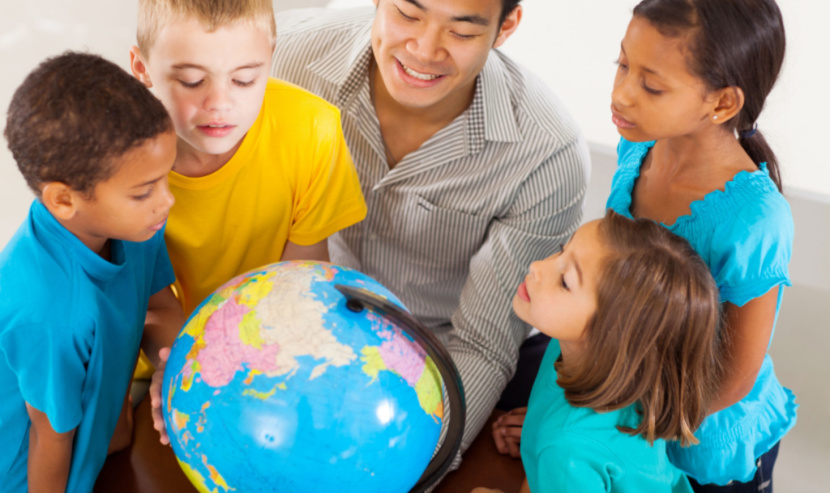
  • Exploring different countries and their flags 
  • Learning how to say basic words and phrases in several different languages 
  • Cooking delicious and nutritious food coming from different cultures 
  • Including toys and facilitating games that have roots in other countries 

It’s about helping children develop better awareness and appreciation of other countries, languages, cuisines, games, ideas and practices. As a result, they become more comfortable with new and foreign concepts (as well as making new friends and playing with children coming from different backgrounds). 

Categories
Blog

How is Play a Form of Learning?

Early learning centres tell you that they use a play-based approach to help children learn, develop and get ready for the big school. But what does a play-based approach mean and how does it contribute to learning and overall development? 

Play as a form of learning

A play-based approach usually means there’s an emphasis on providing large blocks of time for children to play and explore. Those blocks of time might be guided and/or unstructured depending on the early learning centre’s curriculum. 

It’s a form of learning because during playtime, children get to explore freely and pursue their interests. During that exploration, they get to use a wide variety of toys and objects and experiment in a safe environment. By themselves they can better learn cause-effect relationships and start to establish some form of self-reliance and independence. 

Although play seems all fun, simple and exciting, it’s actually a complex activity that requires thinking, remembering, paying attention and decision making. Through play, they develop several cognitive skills such as problem solving and creativity. It’s also a great and natural opportunity for children to learn foundational concepts such as shapes, letters and numbers. 

In other words, children get to learn naturally during playtime. In contrast to semi-passive approaches in traditional classrooms, play is an active form of learning that requires rich interactions with objects, other children and the immediate environment. These interactions and activities provide continuous feedback which is crucial in figuring how things work. This is crucial in helping children make sense of the world around them. 

Encouraging learning through play

Now that we’ve recognised the importance of play in children’s development and learning, how do we encourage it and how can we help children gain the full benefits from play? 

One way is to provide enough resources and materials for children to use and explore. This way, children will have more than enough options and they get to combine and experiment with several different objects. It’s also important to facilitate long hours of uninterrupted play so that children will have enough time to develop their ideas. That’s because children might take some time to warm up and feel comfortable in a new environment and in the presence of other children. 

Play is a natural activity and children have a natural urge to play and explore. The role of parents and early learning centres is to encourage it and make sure that the environment is safe and with ample resources.