


Categories
Blog

How Much Genes Affect Child Development?

Genetics play a significant role in an individual’s full potential, development and even destiny. But it’s not all there is and early childhood experiences can actually override heredity and have a much influence on a child’s physical and cognitive development.

How much genes affect child development

During the children’s early years, their brains are highly responsive to their environments and experiences. This level of responsiveness can even make certain genes switched on or off as children further grow and develop. As a result, their early experiences and the environment they’re in can have lifelong impacts to their brains and bodies.

In other words, “it’s not yet set in stone.” As parents, we have a huge role in influencing what kinds of experiences our children can gain during their early years. We also have a lot of work to do when it comes to making sure our children are in a favourable and supportive environment. With a favourable environment and positive experiences, we can help further enhance our children’s innate advantages and even possibly turn off their disadvantages if there’s any.

For decades researchers have been talking about the Nature vs Nurture approach. Genetics still indeed play a significant role in our development and “destiny.” However, the hereditary advantages we might have may not manifest or be taken advantage of in the first place. For example, if a child is gifted and has a natural aptitude in mathematics, the gift might still be wasted if it’s not further nurtured through the succeeding years. Other children of the same age can catch up and that “gift” will seem just a common trait.

As parents we have to work on both the experiences and environment if we want our children to attain a healthy development. When it comes to genes, there’s not much to do (wait for advanced gene editing to work and go mainstream first). For now what we can do is to put our child in a positive home and learning environment as well as make it all fun for our children.

Categories
Blog

Why Stories are Important to Your Child’s Development?

Reading and sharing stories to your child can spark his/her curiosity and imagination. It’s also a great way for children to learn more about the world as well as different characters and cultures. And yes, stories are an amazing way of having fun for both the parents and children.

Why stories are important to your child’s development

You don’t have to be a great storyteller and storytelling doesn’t have to be an “optimal learning experience.” After all, it has to be fun and natural and the main goal here is to have that stronger bond with your child. In addition, there are already great children’s books you can use. You just have to put in the time to read them to your child every day.

But if you want to do a really good job at telling stories to your child, one way to make that happen is by making it personal and emotional. We humans (both children and adults) are always automatically drawn to personal stories. Also, even the smallest and most trivial of details we remember if something is told as a story (in contrast to what we read in academic books and PowerPoint presentations). One explanation to this is that we’re more engaged when reading or listening to a narrative, especially if it’s a personal and emotional one.

Another way to be a good storyteller is to slow it down. Children are not yet that fast at processing words, phrases and sentences. And also, let your child interrupt you because while you’re telling the story, it’s natural for him/her to get curious and ask questions. If you always slow down and keep it at a good pace, your child will have lots of chances to ask you questions about the details of the story and what happened to a certain character.

Every moment is a learning and developmental opportunity for your child. As he/she starts to make sense of the world, it’s important that most of the inputs are positive, fun and encouraging. This can happen by regularly reading and sharing stories to your child. With stories, you’re also able to better connect with your child.

Categories
Blog

How Do Children Learn?

It seems that the most difficult questions to answer are those that are the most fundamental (such as why gravity exists, is there a Theory of Everything and how our brains actually work). It’s also the case with learning (how we take in information and how do we make sense of it).

How do children learn

As parents, many times we’ve wondered how our children learn and what goes on in their minds. Then, we try to think about how we are as children and how we think at that time. We realise then that it’s impossible because we can’t completely figure out we think in the first place.

Well, researchers and psychologists have developed sophisticated methodologies to try to know how children learn. Optical neuroimaging is one such method where researchers can take a peek (and get some hints about how learning happens). Other methods employ “watching” neural activities while the subjects are performing a certain task. With these methodologies, the researchers can piece together findings and clues about how learning happens.

Still, it’s an incomplete picture. One reason is the complex events and interactions in the brain as well as the 100 billion neurons and the 10 to 50-fold more glial cells (these provide support and protection to the neurons). Also, children already have predispositions for faster learning (such as when it comes to causality and mathematics). It’s like somehow they’re already equipped to navigate our complex society. But, where do those predispositions come from and is it the result of evolution and natural selection? We might need to answer that first before we can completely understand what goes on inside our brains.

Or, perhaps we just have to accept that basic fact and principle (just like we have to accept that gravity, atoms and subatomic particles just exist). When it comes to how children learn, we might just get hints about how they make sense of things and how they develop through the years (inevitably they just get better at language, arts and mathematics). We might never be able to fully understand how the brain actually works and how it connects several different concepts and experiences to form mental models.

Even without that total understanding, we as parents can still help and guide our children when it comes to learning. We can create a supportive and nurturing environment to encourage our children to learn and play. We can also expose them to different learning materials and experiences so they can gain an abundance of sensory input and information. Even if we can’t come up with a complete explanation about how our children learn, still we can help them gain some small advantages so that they can be better equipped for the future.

Categories
Blog

How Technology Affects Children’s Development

The internet, computers, smartphones and other technologies have drastically improved our access to information and entertainment. However, what’s their impact on early childhood development? What are the pros and cons? Is too much screen time really bad for kids?

How technology affects children’s development

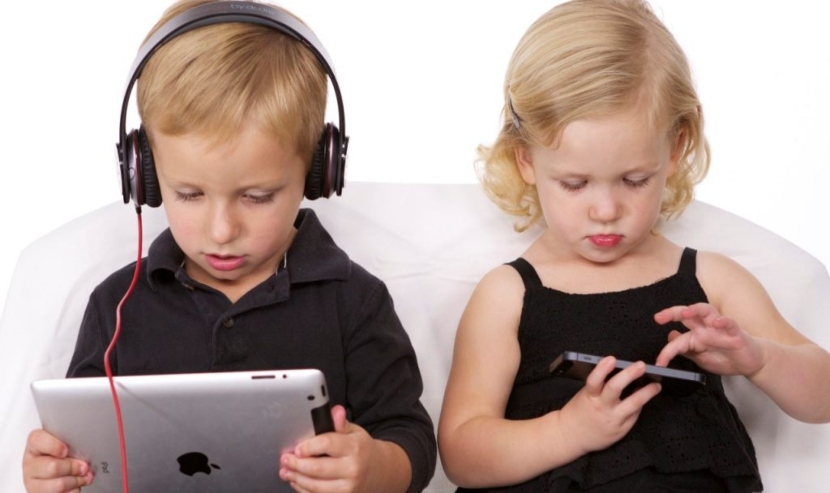
Too much screen time especially during the children’s early years will surely have an influence on their learning, cognitive capacity and rapid brain development. After all, their early years is when crucial neural connections are formed and the core brain architecture is being built. In other words, their early years are a vulnerable period where a little push or pull can have a huge impact on their childhood and beyond.

For example, the persistent notifications while using a computer, tablet or smartphone can affect a child’s ability to concentrate. Every now and then those notifications divert the child’s attention and even make him/her feel that there’s always something urgent to check up on. Perhaps as an adult you’ve also experienced that. There’s always that sense of urgency and constant fight for your attention and through the years, you find it more and more difficult to focus (such as it’s getting hard to read a long article or finish a novel).

Aside from diverting the child’s attention and affecting his/her ability to focus, technology also takes away time from physical play and rich face-to-face interaction. Instead of spending time communicating with people around them or interacting with various objects and the environment, they spend that valuable time on the screen. Note that screen time is two dimensional and there’s not much sensory experience into it. As a result, their brains get deprived of learning from play and active exploration.

There have been studies which might have conflicting results and conclusions about the impact of technology on early childhood development. What’s consistent and clear though is that the early years play a huge and even a permanent role on how the children will develop. It’s crucial that as parents we keep an eye on where our children spend their time. This way, we can help them on their proper development as well as provide them with rich experiences through a nourishing and supportive environment.

Categories
Blog

How to Help Improve Your Child’s Communication Skills

When your child is already 4 or 5 years old, it’s good to talk with your child about his/her today’s activities and the images and videos he/she saw on TV and internet. The key here is to maintain a rich interaction with your child regularly to aid his/her brain development for vocabulary and communication.

Helping improve your child’s communication skills

Language is for communication and expression, which is why as soon as your child learns a few words and phrases, he/she always tries to use them to express and tell you something. Many times what young children say won’t make sense or they still find it hard to express themselves (they only know a few words or it’s still hard for them to formulate sentences). But soon enough and every day they will get better. After all, our brains (especially their brains undergoing rapid development) are good at spotting patterns and making sense of things.

By age 4 or 5, somehow they can already make sense of what happened and then retell that. They can even make up their own words in an attempt to tell a story or describe what they feel. Sometimes they even invent and tell silly stories. We parents have also gone through that process and it’s astonishing how now we can form complex sentences and paragraphs filled with abstract or technical concepts. It’s a long and detailed process and the children’s brains are continuously building neural connections 24/7 during this rapid learning phase.

It’s also astonishing that by age 4 or 5, children already have a vocabulary of 1,000 to 2,000 words. Aside from telling true and silly stories, they also use those words to understand what we adults are trying to tell them. They can also already follow complex directions and pass along information through stories or simple descriptions.

Naturally their language and communication skills will develop, as long as there are always opportunities for practice and interaction. Both children and adults learn best through action rather than explanation. After all, it’s hard to explain how exactly communication takes place but if it just happens, we somehow understand what it is and use that to express ourselves, tell a story or convey information. It’s especially the case with children who must be exposed always to interaction and rich and nurturing environments. This way, they will be getting all the inputs their brains require for productive processing and consolidation of information and experiences.

Categories
Blog

Language Development In Children: Talk With Your Kids And Get Results

A recent study by an American paediatrics institution, shows that toddlers with parents who spend lots of time talking to them and listening to their chatter are more likely to have better language skills and a higher intelligence quota than youngsters whose parents did not engage with them as much when they were young. Conversation is very nutritious to the brain and is crucial to language development in children.

During the study, families were asked to provide day-long recordings for six months. The parent placed a recording device into their child’s clothing which recorded their dialogue throughout the day. The researchers measured the time it took for a response to occur following a prompt from either party. The device recorded instances of a conversational reply within five seconds.

The study found that conversational turns were more important in producing language development in children than exposure to words then. Changing topics mid conversation is crucial to developing language skills, over and above simply saturating the conversation with an increasing number of words. However, vocabulary development does occur to a greater degree in toddlers when conversations happen frequently. Indeed, frequent chatting with toddlers accounted for up to 27% of their higher performance in verbal comprehension a decade later, after taking socioeconomic factors into account.

Children were initially observed between the ages of two and four years old. The children then had follow up tests conducted between the ages of nine and thirteen. The study suggested there is a huge payoff for a child’s brain development when they are stimulated by conversation at an early age. Doctors have recognised that as well as conversation, books are incredibly important to developing a child’s language skills.

Helping children gain access to tools that promote language development is very much needed in order to help them develop their vocabulary and confidence when communicating. This is particularly true in lower socioeconomic groups. At Star Academy Kids, we facilitate learning with story time and by providing a trove of books for kids to read during their down time.

We encourage our parents to spend lots of time talking to their toddlers and encouraging them to read. Try to incorporate several topics into conversation and switch between them when possible to develop your child’s grasp on dynamic conversation. Doing this will increase their vocabulary faster too.

At Star Kids Academy, all of our staff are trained and certified to handle language development in children. We have access to literacy resources on site and will dedicate significant time to talking to your toddlers to make sure their brains are growing at a fast pace. If you’re looking to enrol your child in their early childhood education today, call us on 02 9591 7575 to arrange a site visit and to begin enrolment.

Categories
Blog

The Four Myths Of Early Childhood Education

Critics of early childhood education may make any number of claims about the inefficacy of the preschool curriculum. They might claim that it offers no lasting benefits for children as they commence their formal schooling, they might say early learning is ineffective – that kids don’t learn much during their time in preschool. The cost of early childhood education might seem too expensive or a good preschool might seem too hard to find. We have, in fact, debunked these four myths following some industry research to show that early education programs are in reality really effective.

Myth 1: The Achievement Gap is Not a Problem

Some people are of the opinion that the achievement gap in education is not significant. This myth of omission is totally ignoring the fact that the playing field in the education sector is not level. Opportunities available to school children vary depending on a number of factors, such as availability of resources, natural ability or a nurturing learning environment at home. Students with limited access to these resources tend to struggle in literacy and numeracy, yet early childhood education can help level the playing field to a degree by teaching kids to socialise, solve problems and interact with teachers from an early age.

Myth 2: Early Learning is Ineffective

A commonly purported myth is that early learning is ineffective and that it has no real benefit on a child’s academic performance later in life. Consider that a child’s brain has developed to 85% of its capacity by the time they’re five years old. Lessons learned as a young kid may help the brain form new, stronger neural connections as it continues to grow.

Similarly, although academic performance isn’t impacted to a strong degree by an early childhood education, there are other positive effects of enrolling a child in preschool, like a higher college graduation rate, less instances of involvement with crime and better mental health outcomes.

Myth 3: Early Childhood Education Is Too Expensive

Many people assume that early childhood education is too expensive to bother enrolling their children in. The fact of the matter is that every dollar invested in early childhood education begets a return on investment of 7 to 14 dollars. Having a highly educated workforce is good for everyone and an early childhood education helps to achieve this, as demonstrated by higher college graduation rates for children who have completed a preschool program.

Myth 4: Successful Early Education Programs Are Rare

So far, we’ve discussed the presence of an education achievement gap, the efficacy of teaching young children and the financial benefit to society of having children go through an early childhood education program. Opponents to the preschool system may say that the positive effects of preschool are only felt by individual children outliers from their cohort. This is, in fact, not true, as can be demonstrated by the available data pointing to higher graduation rates, less instances of involvement with crime and better mental health for the majority of children who enrol in an early childhood education program.

Categories
Blog

Can a Single Parent Raise a Successful Child?

Whether because of choice or circumstance, being a single parent is challenging and stressful, which is often why many have doubts about raising a child and helping him/her become happy and successful. Although there are huge challenges, many single parents are still able to do it well and even give their children unique advantages in life.

Single parenting and how children develop

Because there’s only one adult in the household, early on children are often involved in the duties and responsibilities at home. Some of the light household chores are being done by the child so that the parent can focus on other tasks. In addition to those duties and responsibilities, the children of single parents might also be more heavily involved in decision making.

Their participation in decision making can help with the development of their thought processes. Early on they could better understand and appreciate the concepts of finances and responsibility. It can also help them understand at an early age the value and consequences of decisions. It’s a priceless lesson that can help throughout their lives.

However, it’s tough for them to wrap their minds around decisions and consequences. Because of their limited experience, it will take time and lots of mistakes for them to grasp the concepts and reality. As a result, we always have to be patient and always try to find the balance between being too tough and being too soft.

We’re always under pressure and the built-up stress might show when our children are with us. It’s extremely difficult or even impossible to attain the balance. Also, there are times we feel alone and inadequate. We also often feel that we’re not putting in enough time for our children.

Fortunately, it’s still possible to be a good parent despite the challenges. Perfection is impossible though because we only have 24 hours a day and most of that is taken by our jobs and other responsibilities. What can we do then is to guide our children to be mature, responsible, self-reliant and confident. We can accomplish that by letting them take part in making decisions which affect both the parents and children. It’s also important to maintain a positive and nurturing environment for their encouragement, learning and understanding.

Categories
Blog

Integrating STEM Learning in Early Childhood Education

Research has demonstrated time and time again that STEM learning in early childhood education is possible: young children can grasp relatively advanced concepts in the STEM curriculum. STEM stands for Science, technology, engineering and maths. In ways not fully comprehended by researchers, early development of STEM skills seems to translate to positive learning experiences later in life, in STEM, and in other areas like reading and language.

At present, though, it appears as if there is not enough attention being given to the instruction of STEM learning in early childhood education. According to research by the New America Research institute, less than 5% of time in early childhood education is dedicated to STEM learning. This may be because most childcare facilities do not have the resources necessary to teach the subjects.

Mastery of basic STEM skills at a young age seems to be particularly relevant for parents who are first generation migrants from non-English-speaking countries. When a language gap is present, universal concepts of maths and science hold great potential for opportunities later in life for children of migrant parents. These parents can help their children with STEM learning in early childhood education, but not literacy.

Children can and should learn STEM concepts relatively easily in an early childhood education setting. Whether its gardening, building forts, stacking blocks or lining up by height, children can engage in science, technology, engineering and math learning very early in life. Despite the current lack of time devoted to STEM work, parents and teachers want more in an early childhood setting.

Early childhood educators can indeed do more to assist children learn STEM topics during their preschool days. Parents’ confidence is their children’s first and most importance STEM guides. Teachers should rely on parents’ support when teaching STEM topics. Teachers can gain additional qualifications in science, maths and technology for the purposes of teaching. Finally, more STEM learning stations can be incorporated into an early childhood learning environment, says research.

At Star Academy Kids, we do everything we can to help children understand numerical concepts and more about the world of science. We encourage all of our parents to do the same in a home setting and ask you to encourage your children to perform logic based tasks and puzzles at home. STEM learning is so important and by giving our children the chance to learn these skills we prepare them.

At Star Kids Academy, all of our staff are trained to handle STEM teaching whenever it is appropriate. We have access to science and mathematical resources on site and are certified early childhood educators. If you’re looking to enrol your child in their early childhood education today, call us on 02 9591 7575 to arrange a site visit and to begin enrolment.

Categories
Blog

How to Teach a Child to Love Learning

Children are naturally curious, active and energetic. They ask a lot of questions and they touch a lot of things. They always run and play around and say the most random of things.

It seems here that all that randomness and energy don’t mean anything, that it’s not learning because the child is just playing around. But the truth is, everything your child does, hears, sees, smells, feels and touches is a part of his/her learning experience as well as physical and cognitive development.

How to teach a child to love learning

Learning, especially for children, is the sum total of experiences and interactions. It’s not just about reading a book or solving a numerical problem. It’s also about interacting with sand, toys and other objects as well as saying random things and asking a lot of questions that don’t make any sense.

It’s safe to say then that if your child is active and always talks and asks a lot of random questions, he or she loves learning and exploring. We can think of it as a part of our DNA where we’ve evolved to learn a variety of things to help us survive and thrive in this world full of threats. This learning will also help us socialise and cooperate with other people. This learning starts from being a newborn (or even while inside the womb) and it never ends. We always acquire experiences whether we’re busy working or when we’re just lying on our beds thinking about something (or just looking at the ceiling and having nothing to think about at all).

It’s the same with our children. Each moment their brains process the incoming information (sensory, conceptual, abstract and more) and consolidate the learning experiences each moment and each day (especially during sleep where our brains actively process and consolidate information).

In other words, learning happens nonstop and perhaps what we can do as parents is to support our children and make sure our children are always in a safe and nurturing environment. If there are a lot of toys to play around and the environment encourages exploration and investigation, the learning process naturally happens even without our constant supervision. We don’t actually need to teach our child to love learning. What we can do is to provide that kind of environment that makes learning natural and safe. This way, your child will always be actively exploring and that his/her brain will rapidly develop and process positive and fruitful experiences.