
Categories
Blog

How to Prepare My Kid for Child Care

A smooth transition is important because your child will be exposed to a new physical and social environment. Also, child care could be an overwhelming place and experience and take note that there will be more separation time between you and your child.

To better prepare your child for transition, it’s important to get to the basics first by giving the early education educators and carers the following information about your child:

  • Your child’s immunisation status
  • Medical conditions, food allergies and intolerances
  • Toileting concerns
  • Your child’s sleep patterns, emotional tendencies, social preferences and his/her overall wellbeing
  • Custody arrangements and other family matters
  • Your concerns about your child’s development

Once the educators and carers become aware of those, they could then better plan their approach and care for your child. This way your child can better fit in without much issues and you also gain peace of mind that your child receives the best care.

How to prepare my kid for child care

Now here comes the transition and this is the difficult part. Although kids love new toys and new experiences, they could easily get anxious and frightened with this huge step of staying at a child care centre. Everything and everybody is new and this could overwhelm your child. Everything is also unpredictable and seems “unsafe” which is why it’s good to set expectations early on and prepare him/her several weeks before that first day.

To smoothen the transition, it’s a good idea to take your child with you and make a few short visits at the child care centre (could be one hour each visit and at different times of the day). The goal here is to warm up your child with that new environment. Another way to smoothen the transition is by knowing the daily routine at the child care centre and then adopting that at home. It’s like you’re imitating the routine and schedule at the child care centre so that your kid won’t have trouble adjusting by the time comes.

Aside from familiarising your child with the environment and routine, it’s also good to help your child get familiar with your child’s main educator early on. You can just start with a photo of the educator and talk about that person while your child is listening. Remember that the goal is to give assurance and safety to your child and familiarity is a huge factor for that.

A good transition will set a good momentum for your child in his/her days at the child care centre and beyond. It’s important to make this a positive experience as this will help him/her easily make friends and get the most out of his/her learning journey.

Categories
Blog

How to Encourage Good Behaviour in Your Child

Behaviour, whether good or bad, has to come from somewhere. Whether it’s from the environment your child is in (at home, neighbourhood, child care centre), the things he/she saw through the internet, encouragement or reinforcement or something he/she emulated from adults and other kids, most of the ways how your child behaves can be traced back to a specific reason.

Furthermore, it’s important to correct or reinforce a certain kind of behaviour early on because of how kids develop during their early years. More than 1 million new neural connections form each second during the child’s early years and during this same period the core brain architecture is being built. As a result, it’s crucial to get things right early on before things become permanent or almost impossible to change.

How to encourage good behaviour in your child

Good thing is that it’s relatively easy to encourage good behaviour by giving attention to your child when he/she behaves well. Kids crave our attention and they have all the time in the world to get it whether it’s through positive or negative means. Of course, the better choice is to give attention to the positive things so that your child will do more of that.

Another way to encourage good behaviour is by being a role model. As mentioned in the beginning, good or bad behaviour has to come from somewhere (i.e. where else can your child learn this and that?). If your child only sees good behaviour, most likely he/she will adopt it and make it a part of his/her personality and daily routine. Aside from being a role model, it’s also great to create and maintain an environment that allows and supports positive behaviour. For example, if his/her play area is messy and cluttered in the first place expect it to get even more cluttered each minute he/she plays. In contrast, if everything is neat and orderly this kind of environment will likely encourage a neat and good behaviour.

There are many other ways of encouraging good behaviour in your child. The key here is to remain patient and minimise the number of things that might encourage bad behaviour or that will lead to your child making a mess or mistake (you prevent the scenario of scolding him/her in the first place). The result will then be a more positive relationship between you and your child in the coming months and years.

Categories
Blog

How Do I Know If My Child is Gifted?

Is your child gifted or just smart? This is important to learn early on because it can help you decide if it’s the right time for your child to start child care or school (as well as choose the right learning centre). More importantly, you can help your child avoid boredom at home or at school (a problem most gifted children face because of the lack of stimulation and learning opportunities).

This goes beyond helping your child early develop his/her full potential but also about giving him/her the required nourishment. After all, gifted kids face unique challenges that although their intellectual and creative faculties are already advanced, their emotional capabilities might not be able to catch up.

How do I know if my child is gifted

Kids are naturally smart if raised in a healthy and supportive environment. But the ones who are gifted are steps higher when it comes to intellect and creativity. For instance, smart kids can readily give smart answers. But the gifted children can provide insightful questions that will surprise us adults. Gifted kids might also show their advanced development and interests through their drawings and how they play a musical instrument. This is an informal approach and can be very subjective. Good thing is that this can still be useful because it could lead to a formal identification.

An educational psychologist can help in knowing if your child has advanced academic skills. An IQ test and/or standardised literacy and numeracy tests are common ways to know if your child is way ahead of the curve compared to other children his/her age. But as you have realised, those tests can’t measure creative or physical abilities.

A key here is to take the time to be with your child (and also be mindful of the comments of your family and colleagues). Gifted children naturally take the spotlight and rise to the top (i.e. you’ll know it when you see it). The challenge then is to identify it early on and take the necessary steps to support your child’s learning and development. As we’ve mentioned earlier, gifted kids face unique challenges (e.g. extreme boredom) and if you were able to recognise your child’s giftedness early on, you can immediately take measures to make him/her feel more comfortable.

It’s all about your child and how he/she copes with his/her advanced abilities. Your support as a parent matters much more than his/her innate ability and unusual pace of learning. And whether gifted or not, your child always deserves the best of what we can offer every step of the way.

Categories
Blog

How Can I Help My Child Learn Early Numeracy Skills

Numeracy is about understanding numbers and solving problems. Numeracy skills are crucial in the children’s early development and preparation for formal schooling.

Good thing is kids naturally pick up numeracy skills even without our active participation. Children actively learn through experiencing and watching numeracy in action (e.g. telling the story of ‘Goldilocks and the three bears’, everyday activities such as counting fingers and toys and recognising numbers on signs and books). During storytelling time and normal conversations, opportunities for numeracy are always there (e.g. while driving we can say we’re already halfway, it’s 7pm and this means bedtime and 6pm it’s dinnertime).

Helping your toddler build numeracy skills

Great thing here is that even without our conscious effort we can always help our children better understand numbers. For more opportunities though, we can make counting a part of everyday life (e.g. whenever you’re out you can encourage your child to count the number of trees around). You can also read books and sing songs that have numbers in them (good thing is that many children’s books and songs have repeating rhythms and patterns that are easy to remember).

We can take it a step higher by introducing the concepts of size (big, small), height (high, low), weight (heavy, light), speed (fast, slow), distance (close, far) and order (first, second, third, last). For example, you can point at two different trees and tell which one is high or low. You can also make use of a growth chart to introduce the concept of height and also warm up your child to how tall can he/she grow. While cooking or preparing food, you can talk about order (which comes first or which comes next) and also about the relative amounts of ingredients to add (more of that, less of this).

Every moment can actually be a golden opportunity to help your child better understand numbers. Good thing here is the whole thing can be made more fun and part of everyday routine. This is important for productive learning because fun can encourage and even accelerate learning and development.

It’s also our approach here at Star Academy Kids Early Learning Centre. We make learning fun and productive because of our approach (helping children have a strong sense of Belonging, Being and Becoming). With a play-based curriculum, kids build a strong foundation on numeracy and literacy while also having fun and developing their social and emotional aspects.

Categories
Blog

Internet Safety for Preschoolers: What Parents Need to Know

Risky and inappropriate content in the internet (pornography, violence, cruelty) can affect your child’s mental development and behaviour. Also, strangers might initiate a conversation or video call with our kids while we’re away. It’s especially the case now because internet access is quick and easy through tablets, mobile phones and personal computers.

As parents, what can we do then to protect our kids from risky and inappropriate content found online? What can we do to ensure that our children stay safe when using the internet? Let’s discuss some of the most effective ways in keeping your preschooler safe when online.

Limit contact and internet usage

This is the most effective way because we’re not always around to watch our kids whenever they use their phones or tablets. Our children are only one or few clicks away from a violent video or other inappropriate content, which is why limiting the usage of gadgets and internet is the best defence.

After all, it’s highly recommended that the child’s digital media exposure should be only one hour each day. Although digital content exposes our children to lots of different cool and exciting things, it only takes a single image or video to harm our kids. In addition, limiting digital media exposure also means more actual playtime. Note that each hour of phone and internet usage means one less hour for playing with toys or playing outside.

Control what your child can see and access

This is more about being responsible than putting restrictions. Preschoolers undergo rapid brain development and you don’t want to jeopardise or contaminate that with inappropriate digital content. Games and websites should be child- and age-appropriate (you can verify that through Common Sense Media). You can also use parental controls on the devices and browsers.

It also helps to make the appropriate websites and apps highly visible and easily accessible (e.g. making a bookmarks folder or putting those child-friendly websites and apps at the opening screen). This way your child can quickly go to those good sites and apps without the need to wander and look for something else.

Internet safety for preschoolers

It’s still best to be there with our children whenever they access the internet. However, it’s just physically impossible, which is why there should be safeguards while we’re away or while we’re busy doing the cooking and other household chores. Furthermore, it can also help if you set up a schedule for internet usage so that you can monitor your child and create bonding moments.

Categories
Blog

How Do I Keep My Child Safe at Home?

As your child grows, he or she will spend more and more time outside (e.g. playground, early learning centre) and less and less time inside the home. Although there are potential dangers outside, that still doesn’t mean your home is 100% safe for your child. Let’s discuss several ways to improve safety at your home so that your child will be protected and far from harm.

Install smoke detectors and safety switches

We should first watch out for the potential fires and electrocution. A fire can spread fast and instantly harm your child. Electrocution is also a serious issue especially when most outlets and power points are within the reach of children.

Commercial facilities and early learning centres have high fire and electrical safety standards for the safety of the public and protection of valuable assets. It’s a standard now to have smoke detectors, fire alarms and electrical safety devices in those facilities. It should also be the case with our homes because we and our kids still stay inside our residences most of the time.

Securely store potentially harmful substances

Medicines, household cleaning products and other potentially harmful substances (also sharp items and small objects) should be stored securely and kept away from our curious and playful kids. Keep in mind that our kids are in the active exploration phase and they always like to play with their hands and mouths. They might eat or swallow substances if those substances are just lying around.

It’s also great to have someone watch for your child at all times especially during playtime when your kid is all active and energetic. He or she might hit or play around with something that could be potentially dangerous. It’s hard to locate all the hazard points and even after a thorough inspection we could still miss a few things, which is why it’s important to be alert (or have someone watch your child while you’re busy).

Let the child play but still with your guidance

In early learning centres children are allowed to play and explore but still with the guidance of qualified educators (such as what we do here at Star Academy Kids Early Learning Centre). This way, the kids will feel safe while they’re still being encouraged to play, explore and get active.

Safety first. But this should not get in the way of the child’s curiosity and never-ending energy. By following the tips mentioned above and making sure you enrol your child in a reputable early learning centre, you’ll gain peace of mind about your child’s safety.

Categories
Blog

Here are Some Screen Time Recommendations for Preschoolers

Some screen time can be good for kids because through TV and digital media they get exposed to new things and ideas. However, too much can be a bad thing to children’s physical and brain development.

After all, preschoolers need to interact more with real-world objects and the surroundings. If their eyes are always glued to the screens they will have fewer chances of playing outside. They’ll also be physically inactive which would affect both their brains and entire bodies. In other words, the screen time can take away the opportunities your child needs to get active and do real-world learning.

Screen time recommendations for preschoolers

Digital media exposure should not be more than 1 hour each day (for kids ages 2 to 5 years old). This is just a rough recommendation because we also have to consider the quality and nature of each hour of screen time. For instance, video chatting with family is not counted because this type of screen time is of high quality and important in communicating. On the other hand, letting your child watch bad TV shows or low-value YouTube videos even for just 30 minutes could become a bad habit and lead to long-term negative results.

What should you do then? It’s good to focus both on quantity and quality. As much as possible limit digital media exposure to 1 hour each day and during that limited screen time what your child sees should be educational and of high value. It’s also good to make sure to know and research about the different games and apps before letting your child use them. There are thousands of apps and games out there and only a few of them can actually do your child any good.

Putting screen time strictly on 1 hour each day sounds impossible. But it’s very doable if we provide good alternatives to digital media exposure. For example, unstructured playtime (with interaction with real objects and other people) can really help your child stay occupied. Bedtimes and family meals are also great opportunities to let your child keep his/her mind away from the TV, laptop, phone or tablet.

This is a crucial developmental period for kids and what they see during their early years can have a serious effect to their long-term development and future. Also, limiting the screen time and instead allowing your child to be in actual playtime and interaction with other people can help him/her better adapt to the real world and transition to formal schooling and beyond.

Categories
Blog

How to Encourage Your Child to Eat More Vegetables

Vegetables are a great source of vitamins, fibre and antioxidants. These also add variety to the children’s meals (it’s easy to run out of food ideas if it’s all meat). Eating more vegetables is also important because children undergo rapid physical development. If your child had built a healthy eating habit early on, he/she will be better protected against heart diseases and some forms of cancer.

It’s now or never (good news though if your child already eats some vegetables and your goal now is to encourage him/her to eat more). Here are a few tips to encourage your child to eat more vegetables:

Becoming a good example

Kids often imitate what they see around them (including whatever you’re eating and doing). As a result, it’s always a good thing to let your child see you eating vegetables. After all it’s hard to expect your child to do something you want if he/she can’t see you doing the same. Also, it’s good to make each mealtime a happy and positive experience (especially when vegies are on the table). This way the vegies will be better associated with positivity (instead of the child hating the vegies whenever he/she sees them).

Just keep trying

Some kids might need to try a new food at least 10 times before they can accept it. It’s especially the case if we’re talking about vegetables (after all who can honestly tell that they really love the vegies). Good thing is kids also have a good way of adapting. After enough tries they’ll find that vegies are not really that bad after all. Also keep in mind that vegetables don’t really taste great so it’s fairly reasonable to give some time to your child for him/her to accept the new food and adapt.

Use further praise and encouragement

The goal here is to make the experience light and positive. If there’s some kind of reward, eating more vegetables could be a lot easier for your child. The reward doesn’t have to be a toy or something tangible. Just some praise and encouragement will do. No pressure here (just a light experience) because you can always try again next time.

Encourage your child to eat more vegetables

There’s no reason to make a big deal out of this because sooner or later your child will accept the new food and eat more vegetables. This can happen if you make it all a positive and light experience for your child. Also take note that it might take a lot of tries before your child can truly accept the vegies.

Categories
Blog

When Should a Child Get an Allowance?

Is it time to give your child some pocket money? Is it all right to let your child take financial responsibility this early? And how do you deal with seemingly irrational expenses such as when your child spent all the money on lunch and snacks?

At 4 or 5 years old it’s already good to give your child some allowance he/she can use to buy stuff. It’s the age range when kids start to demand and display independence and control. If your child already has money of his/her own, he/she can practice independence and even develop his/her self-confidence.

Aside from encouraging your child to make his/her own decisions regarding money, the allowance or pocket money will teach him/her the value of money and how to manage it properly. This is much better than abstractly explaining the value of money and how to spend it wisely. Instead, you give him/her the tools and resources and let your child learn through his/her actions and the consequences he/she receives.

For instance, your child can instantly learn the consequences of overspending. What happens if your child spent all his/her money on snacks and lunch? Your child will realise (with your guidance) that he/she will have nothing left for anything else. He/she won’t have any money to buy the things he/she truly wants. In addition, your child won’t have money saved for future expenses or for bigger purchases such as buying a gift or a special toy.

When should a child get an allowance?

It’s always good to start early so that you immediately help your child get in a strong foundation. This applies to handling money even if it’s all just small purchases and small savings. After all, it’s not about the amounts but on the habit and behaviour. If your child has learned early on how to manage small things, expect him/her to be more ready to manage bigger things and deal with bigger amounts of money as he/she grows.

Categories
Blog

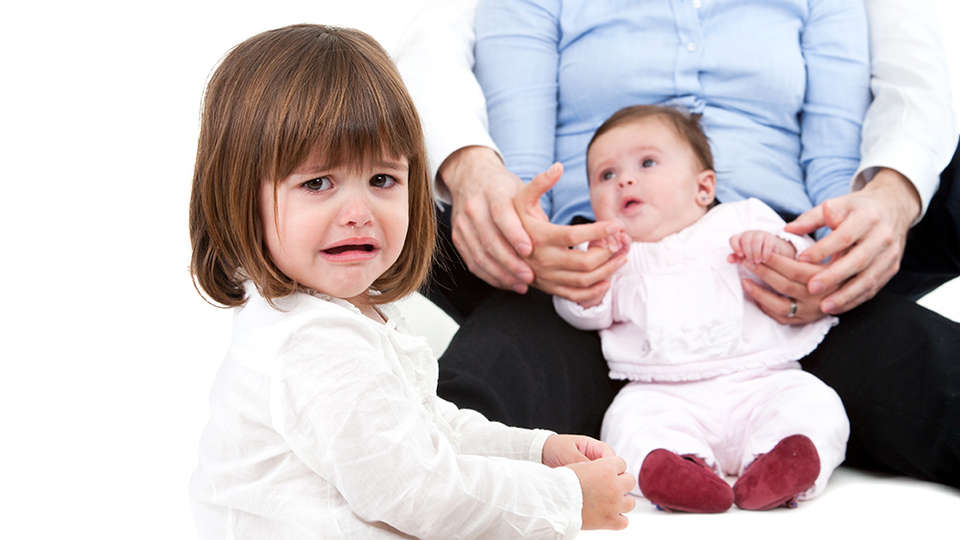
Do Toddlers Get Jealous of a New Baby?

The short answer is yes. Also, your toddler won’t be aware of the jealousy because he/she still doesn’t have the maturity to recognise the feeling.

Good thing is that there are signs your toddler is jealous of the new cute little thing in the house. But the best thing to do is to prevent that jealousy and somehow make the arrival of a new baby a smoother transition and experience.

It’s about transition and warming up

Although toddlers always look for something new and stimulating, they actually crave structure, order and stability. As a result, expect minor and drastic behavioural changes when there’s something big and new like that of the arrival of a new baby.

Perhaps it’s due to competition for attention (the root of sibling rivalry). If your toddler got used to being the only child, the arrival of a new baby threatens your toddler’s status. This explains the challenging behaviour toddlers display when there’s a new baby brother or sister. Both kids and adults have this tendency to get attention whether in a positive or negative manner. In the case of kids, it’s through challenging behaviour because they still can’t figure out how to best express their feelings.

To help them cope, it’s important to take it slow and warm up. Keep in mind that it’s a huge change and the goal is to smoothen the transition, which is why it’s good to talk with your toddler about your new baby and explain some of the changes (e.g. perhaps your husband will be the one to take him/her to school, there will be less time that you would be together, that you would be gone for a while to give birth).

But if the baby is already here, expect the big brother or sister to behave differently because he/she is still adjusting. Your toddler still doesn’t know how to react and this is a huge change in his/her life. To best deal with this, again take it slow and explain what’s happening. Also explain the role your toddler will play as the big brother or sister and encourage him/her to look after the baby brother or sister.

Do toddlers get jealous of a new baby

We can think of it more as adjustment rather than jealousy. After all, it’s a huge change and your toddler might have been used to being the focus of everyone’s attention. In addition, behavioural changes are expected because most kids still don’t know how to deal with their feelings. It can be annoying at times especially when you’re juggling home responsibilities and have been losing sleep for several months now.

It’s a natural process and an inevitable part of the journey. Although your toddler is already displaying signs of intelligent thinking and behaviour, the changes and transitions can still be a bit difficult to him/her. Your goal then as a parent is to make the transition a bit smoother by warming him/her up of the coming changes and explaining the entire process. Your toddler can then better understand what’s happening and may even realise the need to look after his/her baby brother or sister.