Categories
Blog

When is the Right Time for Toilet Training?

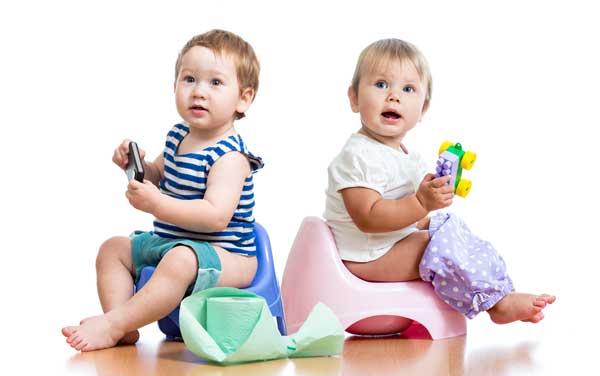
Around 2 or 3 years of age, most kids will be ready for toilet training.

However, this should happen naturally. After all, kids need to go at their own pace. That’s why it’s recommended to trust your child with his or her patterns and behaviours. As parents, our role is to make toilet training as natural and positive as possible.

Keep it calm and no pressure

For several months, young children have been used to finishing a wee or a poo on a nappy. It’s just reasonable to expect some time before kids can successfully transition into using the toilet. It’s an entirely different setup and it also takes time for kids to figure out how things work out beyond using the nappy.

To make the transition easier (and the task a bit easier for parents), educators from early learning centres work closely with families so that kids can confidently transition to using the toilet independently. Even with the combined efforts of the families and early learning centres, the entire process still takes time. Also, kids often have different paces when it comes to transitions and development.

That’s why it’s best to remove the pressure and make the whole experience positive for your child. Also, expect that there will be lapses and accidents wherein after consecutive successes, the child may “fail” again at using the toilet.

As with other behaviours, the ideal approach is to make the experience positive and reinforce the positive results by giving some kind of praise or reward. This way, your child can associate using the toilet with a positive feeling (e.g. your praise or encouragement).

This is important whether at home or at the early learning centre. The positive reinforcement and experience should remain consistent no matter the environment. After all, this period is also a preparation for your child’s formal schooling later on. Sooner or later your child needs to use the toilet confidently and successfully whenever he or she is outside the home environment.

When is the right time for toilet training

Expect your child to be prepared around 2 or 3 years of age. You’ll notice some of the signs your child is ready such as when he/she is showing interest in others using the toilet, he/she lets you know a wee or poo was done and your child stays dry for a couple hours at time.

Take note that the entire process takes time. To make this easier, here at Star Academy Kids Early Learning Centre we closely collaborate with families to assist in the process of the toddler’s toilet training. We make the entire experience as natural and positive as possible. Contact us today if you require more information about our approach.
Categories
Blog

What Should Toddlers Eat for Optimal Development?

Our daily diet affects us more than we realise. Truly, what we eat has effects not just on our physical health and abilities, but also on our cognitive capacities, psychology and overall functioning.

Those effects are greatly magnified to toddlers (1 to 3 year olds) because of their small bodies and fast-developing brains. This is the period wherein crucial neural connections are being formed and their physical foundations are being built. That’s why it’s important to provide them the nutrients they require whether they’re at home or at the early childhood learning centre.

Munch & Move

Government agencies and other organisations have already formulated and implemented health initiatives such as Munch & Move (source) to support the children’s growth and wellbeing. Some of the key priorities of this initiative are the following:

  • Choose water as a drink
  • Choose healthier snacks
  • Eat more fruits and vegetables
  • Get active each day

The overall goal is to promote and encourage healthy eating and physical activity habits. After all, it’s difficult or almost impossible to learn and function well if the human body can’t keep up. This especially applies to children where much of their learning heavily depends on their play and how they interact with objects and the surroundings. This requires physical activity (lots of it) and enough energy so kids will have sufficient opportunities for playtime.

As a result, nutritional meals and snacks should always be available to children whether at home or at the early childhood learning centre. Aside from meeting their energy requirements, the meals and snacks should also provide nutrients essential for their physical growth and development. This way, toddlers can build a strong physical foundation for their future and keep up with their peers when it comes to their weight and height.

What should toddlers eat then?

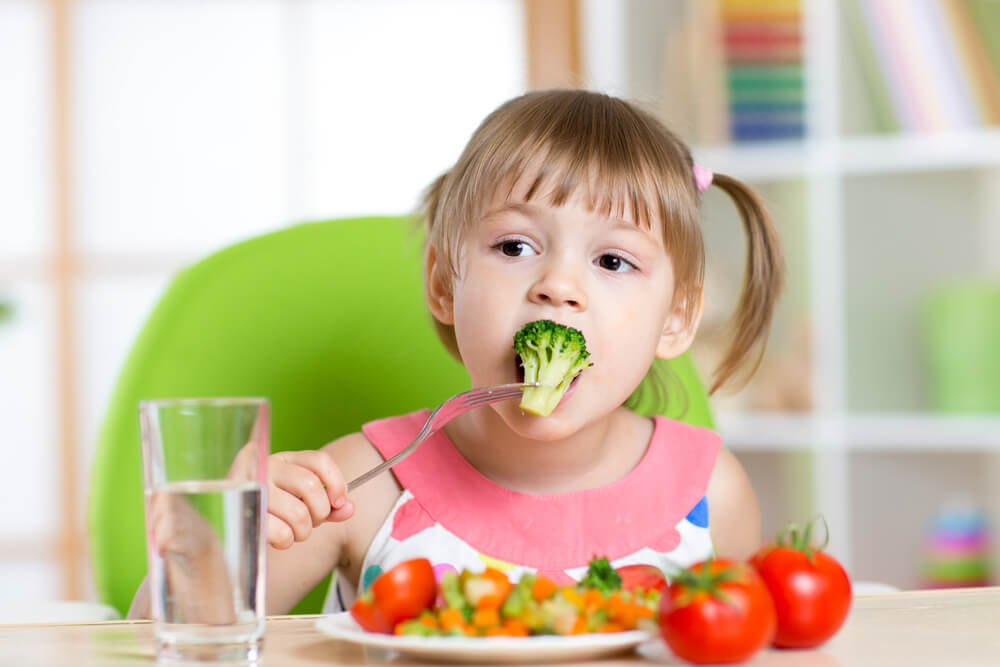
More fruits and vegetables, water as the drink (no to sugary and caffeinated beverages) and healthier snacks. This seems fundamental but sticking to the basics actually results to huge benefits (especially when it comes to physical health).

But it doesn’t have to be all bland and boring. For example, here at Star Academy Kids Early Learning Centre, our program includes a 4-week rotating seasonal menu that meets children’s needs, taking into account their nutritional and energy requirements. We also prepare alternative meals for kids with allergies and special dietary or cultural requirements. Contact us today if you want to learn more about our menus that have been developed in accordance with the Munch & Move program.

Categories
Blog

How to Best Prepare Kids for Formal Schooling

As parents and adults, we don’t remember much how we were prepared for schooling. And right now, there are still times when we still feel clueless about how can we best care for our kids and prepare them for the future.

Truth is, we don’t have to figure out everything to become a great parent. Most of the time, we just have to focus on a few critical decisions that will shape our children’s lives. And thankfully, we can easily come up with good decisions because the government and private sector are prioritising quality early child education.

Choosing an early education service

This is one of those critical decisions that can give your child early advantages. The right decision can also help your child gain a smooth transition towards formal schooling.

In the eyes of a child, the transition to a formal school is very scary and intimidating. Aside from the separation anxiety, the school is an entirely new environment for the kids. The environment is more formal and a lot less playful. Formal schooling is the time when things get a bit more serious.

To make the transition more welcoming, it’s good to help your child become more equipped and more confident. During the preschool period, kids can get more equipped by gaining a strong foundation on literacy and numeric skills. This is also the perfect time to build their confidence and self-esteem.

A high self-esteem is crucial to make formal school transition a success. With a high self-esteem, kids can confidently and readily interact with fellow children. Formal schooling becomes a lot more fun if kids get to talk with and enjoy with other children.

Just like in work or at the office, the work experience gets a lot smoother and more enjoyable if there’s a positive social setting. If we respect and enjoy with the people surrounding us, our work becomes more fulfilling. In fact, one of the top reasons why people leave a job has more to do with other people than on the nature of the work itself.

It’s similar to whether kids can successfully transition to formal schooling. They have to be confident around other kids so they can enjoy their time and focus more on learning. This is only possible if they’ve already built a high self-esteem during preschool.

Best prepare kids for formal schooling

One of the few critical decisions we’ll make as a parent is the choice of an early education centre. After all, kids will spend a significant amount of time in it. And its environment can have the same impact as our homes to kids.

That’s why the early learning centre should resemble a home environment. This way, kids can feel safe when playing. This also grants them freedom to interact with other kids (which is crucial to their social and cognitive development). This allows them to build their self-esteem so they can confidently interact with other people no matter the setting or environment.

That’s our approach here at Star Academy Kids Early Learning Centre. One of our priorities is to help kids develop their self-esteem so they can successfully transition to formal schooling. Contact us today for more information and visit our centre so you can see the fun environment we’ve prepared for kids.

Categories
Blog

How to Give Your Child a Strong Start

Up to 90% of children’s brain development occurs in the first five years of their life. In addition, over 1 million new neural connections are being formed every second during the kids’ early years.

With this information, parents and government organisations are now placing more emphasis on early childhood education. For instance, government agencies and education sectors are now formulating and implementing measures to make quality early childhood education more accessible to kids no matter where they live or what their circumstances are.

Starting strong is the key

As a parent, you’re now starting to think about your child’s future. How can you help ensure his/her success? How can you best prepare your child for formal schooling and beyond?

The key is to give them early advantages (starting strong). This way, they will gain a solid foundation that they can take advantage of during their formal schooling and even during their professional lives. They will also be able to stand on a higher platform so they can get better and easier access to opportunities.

Early advantages do compound and accumulate. For instance, a firm academic foundation can make kids quickly learn more advanced concepts that will be presented by a formal school. As a result, they won’t be left behind. This is great for their self-esteem as they gain more confidence when interacting with peers.

How to give your child a strong start?

With all these benefits of starting strong, indeed how can you best prepare your child? How can you give him/her the early advantages necessary to become successful?

The prevailing approach is to emphasise both fun and learning. Learning is already given because after all, kids have to gain the basic numeric skills and literacy. But what about fun?

Incorporating fun in learning sessions makes class sessions more encouraging. With more encouragement comes a higher desire to learn. Also, incorporating fun actually helps kids develop in more dimensions as opposed to pure sit-in-a-chair approach.

That’s because using a fun approach (also known as play-based learning), kids are able to interact with peers, objects and the environment. This is true whether it’s at home or an early childhood learning centre. In either environments, more interaction with people and surroundings actually boosts their cognitive, social and physical development.

With more movements and richer interactions, more parts of the brain participate each second. Take note that over 1 million new neural connections are being formed each second during the kid’s early years. The core brain architecture is also being developed during this period. It’s crucial that kids do more physical movements and richer social interactions so their brains get developed optimally.

Here at Star Academy Kids Early Learning Centre, we allow kids to explore and interact with fellow children, objects and the environment. This is possible in our fun and supportive environment. Contact us today if you think this approach is the best for your child.

Categories
Blog

Will Kids Today Realise Their Full Potential?

Around 1 in 5 children are developmentally vulnerable in one or more domain, according to a recent finding by the Australian Early Development Census (AEDC). In other words, many kids today might not be able to fulfil their full potential during formal schooling and beyond.

One probable cause is that early child development programs are not still optimal according to the needs of the kids. Also, vulnerabilities might still be more pronounced among indigenous children (e.g. perhaps they still don’t have access to excellent resources and facilities).

As a result, the future economic growth of the nation and overall wellbeing of individuals will be affected. After all, economic success (whether in business or career) has some effects on individual happiness. In addition, if everyone’s enjoying financial success, the nation will naturally benefit as a whole.

Why the early years is crucial

Back then people didn’t pay much attention to the children’s early years. People thought that the child’s first three years only had a limited impact to his/her later development.

But recent researches show that early experiences have a decisive impact on the brain architecture. In addition, the early years is the period wherein the brain undergoes rapid change and development. And this is also the period when the capacity for change in the brain is at its highest.

Also, it’s not all about genes anymore. Although genes still have a huge role in the full capabilities of each person, early experiences can have a huge impact on whether those full capabilities will be realised or not. In fact, up to half of a person’s intelligence potential is developed by age four (according to UNICEF paper). It’s true that brain cell formation is already complete before birth. But the crucial neural pathways and networks will develop during the child’s early years.

It’s also true that babies and children develop at different rates. But some kids might really fall behind because of early stress and lack of proper guidance and education. Remember, the children’s early years are when they’re building a foundation for their future.

Will kids today realise their full potential?

Thankfully, numerous organisations and government agencies already have taken measures to help most kids develop their full potential. One amazing example is the Early Years Learning Framework which has a strong emphasis on play-based learning. After all, this approach encourages more interaction with peers, objects and the environment (which how most people learn best). Literacy and numeracy are still important for building a strong academic foundation. But with play-based learning, kids will also develop their social skills and improve their learning.

With this approach, kids now have a greater chance of realising their full potential. Organisations and governments still conduct researches and studies to further improve the early childhood development programmes.

Good news is right now many early learning centres (such as here at Star Academy Kids) have a strong emphasis on play-based learning. In these safe environments kids will be able to play and explore which is great for their social and emotional development (while having fun). Contact us today here at Star Academy Kids Early Learning Centre if you require more information about our approach.
Categories
Blog

The Effect of Early Childhood Education on Future Income

One study shows that good early childhood interventions indeed increased people’s incomes by 25 per cent. These randomised interventions (source) were conducted during 1986-1987 in Jamaica and the researchers interviewed the participants 20 years later.

One possible reason for the participants’ increased incomes is that early childhood has more economic impact than we realise. In fact, children’s early experiences greatly affect their brain architectures. This is when the foundation is rapidly built that will affect the kids’ future learning, behaviour and even physical health.

Early advantages & the Matthew effect

“The rich gets richer and the poor gets poorer” briefly describes the Matthew effect. We can think of it as when people acquire early advantages in life (like being born rich), there’s a good chance that they will turn out to be more successful in life compared to other people who had some early disadvantages (poverty, lack of access to quality early childhood education).

It’s true that early economic advantages will expose people to more interesting opportunities. And these advantages give children and adults a jumpstart in their professional or business success. The successes and advantages accumulate and build up on top of the other. As a result, they get way ahead of their peers who started out on a less favourable situation.

About survivorship bias

Well, we’ve been hearing about people who had terrible childhood and didn’t get access to quality early childhood education (and yet became massively successful). However, they might just be the exceptions. The truth is we’re not just hearing about the majority of people who didn’t make it later in life.

It’s called the Survivorship Bias wherein we often focus on the successful ones while ignoring the failures because of their lack of visibility. In the news we often hear about people becoming successful despite all odds. What we don’t hear is there are countless other people who experienced the same things, worked hard and still they didn’t realise their full potential.

Effect of early childhood education on future income

That’s why it’s important to give children the “early advantages” so they can enjoy greater economic success later in life. This is true in almost every part of the world including in the developed countries.

Here in Australia we have the Early Years Learning Framework which has been developed by the government with close collaboration with the early learning sector. This framework has a strong emphasis on play-based learning which allows children for more interaction with objects, environment and fellow kids. This could greatly help in properly shaping children’s brain architecture so they can better prepare for formal schooling and beyond.

Here at Star Academy Kids Early Learning Centre we give a strong emphasis on play-based learning in our curriculum. Aside from helping children fulfil their potential, we also help kids have fun. Yes, it’s possible to learn and have a great time too (in fact, learning gets better if kids are having fun). Contact us today if you want to learn more about our approach.

Categories
Blog

What Age Should a Child Get a Mobile Phone?

Many people recommend that kids should at least be 12 or 13 years old (high school age) before they get mobile phones of their own. That’s because the child’s early years should be dedicated to real-world learning and interaction as well as face-to-face communication.

Up to over 1 million new neural connections are formed every second during the child’s early years. This is the time when the child’s brain architecture and the foundations for later learning and development are being built. As a result, the child’s early years are crucial for his or her later successes and happiness. This period is then best focused on interacting with real people and physical environment.

The dangers of modern age

Mobile phones and internet allow for easier and faster connectivity. It also provides a high level of convenience because we can now easily access information, products and services. But this comes with a high cost. We now have less time for real-world interaction. Every hour we spend on our mobile devices is one hour taken from communicating to people and exploring the world.

This is especially the case with young children who are just starting with their learning and exploration. They’re starting from almost a blank slate. The first things to be put on that blank slate will be crucial to the children’s later development. That’s why us parents we have to be careful of what to put there. Also, kids don’t yet have “filters” yet. They might accept and absorb all information they see as true. This can be detrimental to their learning.

Moreover, kids might be learning from wrong or inaccurate sources. They won’t be able to discern truth from lots of misleading information available in the web. Many websites now are targeted towards children (young and evolving market) which make kids even more vulnerable to misinformation or inaccurate representation of reality.

Mobile phones for safety reasons

Giving kids mobile phones can be justified by saying it’s for their safety. They can text or call whenever something’s wrong. However, this might not be the best or only approach to guarantee their safety.

For instance, most modern environments now are considered safe. If you think that giving your child a mobile phone will guarantee your peace of mind, there might be something wrong in the environment in the first place. Consider moving to a new location (your home, the early learning centre) or driving to other routes to make you and your child feel safer.

In cases where it’s an absolute necessity for your child to have a phone, limit his or her usage of it. Mostly it should be for connectivity and contact, not for play and learning. Extended hours of mobile phone usage lead to physical inactivity. Also, we humans (especially kids) learn best by interacting with 3D objects and the physical environment and communicating face-to-face with other people.

What age should a child get a mobile phone? Think about the consequences and the impact of a mobile phone to your child. The focus should always be on real-world learning especially during the child’s early years. Whether at home or early learning centre, kids should touch and interact with physical objects and environment instead of what a phone screen projects.

Here at Star Academy Kids Early Learning Centre, we encourage active play, exploration and investigation for kids. We provide open-ended and child-directed programs so kids will explore possibilities and make further sense of the world. Enquire now if you want to learn more about our warm and friendly approach.

Categories
Blog

Getting Along vs Getting Smarter: Which is More Important?

Literacy and numeracy are crucial to children’s learning and development. These skills allow kids to learn further, prepare for formal schooling and integrate well within a society. Moreover, getting smarter is crucial to competitiveness and getting ahead.

But is that all there is? What about getting along with fellow kids and other people? Is it all about getting ahead?

Importance of social skills

Back then there’s a heavy emphasis on academics (literacy and numeracy) because these are essential to prepare people in careers and businesses. But recent scientific researches show that this might not be the optimal way.

For example, the Early Years Learning Framework has an emphasis on play-based learning. This involves more interaction with peers, objects and the environment which results to better learning. This is also a lot more fun than long traditional classroom settings. Children will now be able to learn while still enjoying their time.

Learning the letters and numbers still has its place in child learning and development. But with an emphasis on play-based learning, kids will be able to interact with fellow children as they play and explore together. The foundations of collaboration and communication will also be further built this way.

Also, excellent social skills are crucial to adult success. After all, huge and impactful things only happen due to the collaboration of many people. Proper communication and empathy are important in understanding one another and moving forward together. In fact, some studies suggest that social skills could be more vital to adult success than academic knowledge.

Getting along vs getting smarter

Both are important to preparing kids for formal schooling and later years. We can also think of it as essential to one another. Take away one and the child’s full potential will never be reached.

For instance, getting along will make the children’s brains to become more active and engaged (thereby improving their intelligence and situational awareness). On the other hand, getting smarter might make getting along much easier because kids will be more confident to interact with other people. That’s why it’s important that at home and early learning centre your child will learn how to get along and get smarter.

Here at Star Academy Kids Early Learning Centre, we always encourage kids to get along and explore. We provide a warm, friendly and safe environment for children so they can gain a strong sense of Belonging, Being and Becoming. As a result, children will maximise their learning while also having fun as kids. Enquire now and book a tour today if you want to learn more about our program.

Categories
Blog

How to Raise a Happy Child? Here’s the Science & Psychology

To raise a happy child, you should make him/her feel safe, surrounded with happy people (that includes you) and placed in an encouraging environment. In other words, the principles to make people happy also apply to young children.

Make your child feel safe

If your child feels safe, this makes it easier for him/her to smile and laugh at things. There are fewer things to worry about. Take note that children feel like everything’s new and in chaos because they’re just starting to explore the world.

One way to make kids feel safe is by establishing routines and traditions. Make a child’s day predictable by setting specific schedules for dinner, playtime, going out and celebrations. Provide a structure so kids know what to expect each hour and every day. This way, they will have more physical and mental resources to be happy about the things and experiences they encounter along the way.

Surround your kid with happiness

Kids learn from the environment and often just reflect what they see and hear from other people (especially you the parent). If you’re always happy, your child is most likely to adapt that emotion and attitude day to day.

Perhaps you’ve already heard “You’re the average of 5 people you spend the most time with.” Whether we like it or not, we often emulate the traits and nuances of people surrounding us. This effect is magnified because children can’t yet filter out undesirable traits, mental states and attitudes. Kids often just copy what they see.

That’s why it’s best to surround your child with happiness as much as possible. As a parent and as the person your child is spending the most time with, be happy and smile often. Speak in a vibrant tone and keep yourself healthy (excellent physical health has a huge impact on happiness).

Kids should be in an encouraging environment

Our environment affects us more than we realise. For example, if our office has a professional and elegant feel, we’ll be better primed for professionalism, excellence and success.

It’s also the case with children who can easily be influenced by their surroundings. If kids are in a supportive and encouraging environment, they’ll feel safe and free to explore and play. This then leads to happiness because they’ll have more fun along the way.

This not only applies to the early learning centre you choose for your child. It also applies to how your home is organised. If your home is safe and automatically encourages playtime and exploration, certainly your child will experience happiness. This will also positively affect your child’s later health, behaviour, learning and success.

Why raise a happy child

Notice that the tips mentioned above are easy to implement (you can actually do them today). Often, you only need to invest more time and effort with your child to make him/her happy. It’s a small price to pay for your child’s happiness, security and long-term success.

Although happiness is difficult to quantify, we all know it whenever we see a happy child. Also, it’s now easy to figure out the things that will lead to happiness. For example, a positive and nurturing environment can promote happiness and even help kids gain long-term benefits.

That’s what we do here at Star Academy Kids Early Learning Centre. Aside from preparing children for the future, we also make the learning experience fun for all kids. Our supportive and nurturing environment makes it possible to raise happy children (but home plays a bigger role here).

Contact us today if you want to learn more about our program and facilities. We have locations at Liverpool, Belfield, Canterbury/Campsie and Campsie.

Categories
Blog

3 Easy Ways You Can Do Today to Make Your Child Smarter

Over 1 million new neural connections are being formed every second during the child’s early years. Early childhood care and learning also has a huge effect on the children’s future happiness and economic well being.

That’s why parents now are willing to invest more money, time and effort in ensuring their children’s bright future. They now understand the importance of the early years in a child’s long-term development.

How to make your child smarter

It’s especially the case when it comes to intelligence. After all, higher intelligence levels can give kids a competitive edge in formal schooling, careers and business. They would also be able to contribute more to the society because they can create better and holistic strategies whether it’s in their future career or their own enterprise.

How to accomplish this? To make your child smarter, it’s best to start as early as today. It gets better if you follow through these strategies to make your child gain a higher intelligence level:

  1. Talk with your child often.
  2. Encourage more play and physical activity.
  3. Become a happy parent.

1. Talk with your child often

Regular practice is always the key to acquiring and mastering a certain skill. It’s also the case with gaining communication skills which are very crucial as your child will start to interact with fellow kids and other people.

Children will struggle at first when communicating (e.g. telling a story) because their brains haven’t yet formed strong neural connections responsible for language. But as they get more practice, they will expand their vocabulary and be able to express themselves more easily.

In addition, they can now ask more questions on how things work. This will then further expand their knowledge and fuel their inquisitiveness. Perhaps talking with your child often is the most underrated advice when it comes to improving intelligence. But once you realise the benefits, you’ll set aside time each night to talk with your lovely son or daughter.

2. Encourage more play and physical activity

Why are kids so active and restless? One reason is that they’re busy exploring and making sense of the things around them and their surroundings. They want to touch different things and figure out their textures and how these objects move or change depending on the children’s movements and activities.

Playtime is a huge opportunity for the child’s brain to form varied and strong neural connections. Moreover, the human body is designed for action and movement. Idleness doesn’t only harm the body. It also stunts mental growth and brain development.

That’s why government agencies and educational institutions now pay equal attention to the playtime as the academics. After all, kids are just starting to make sense of the world. Playtime can provide those opportunities so kids will learn more.

3. Become a happy parent

Happiness may actually improve intelligence levels. That’s because happiness may encourage further learning and playtime, which becomes a positive feedback loop for better learning and development.

Happiness may also signal that the person is physically healthy, getting proper care and exposed to adequate opportunities. As a result, the person can better focus on learning and acquiring more skills.

It’s also the case with kids because they’ll always feel safe and therefore be able to better focus on learning and playing. But how will you teach your child to be happy? Becoming a happy parent is the key. After all, your child will often just reflect your attitude, emotion and state of mind.

Happy & prepared for the future

There are many facets of intelligence (including social and emotional intelligence). But often we think of intelligence as the ability to understand concepts, process information and acquire new skills.

To prepare your child for the future and help him/her become smarter, it’s best to create an environment that will support that goal. Whether it’s at home or at the early learning centre, the environment should be safe, supportive and nurturing.

That’s what we have here at Star Academy Kids Early Learning Centre. Our encouraging environment and passionate educators will help your children gain a fun and productive learning experience. Contact us today if you want to learn more about our approach.